
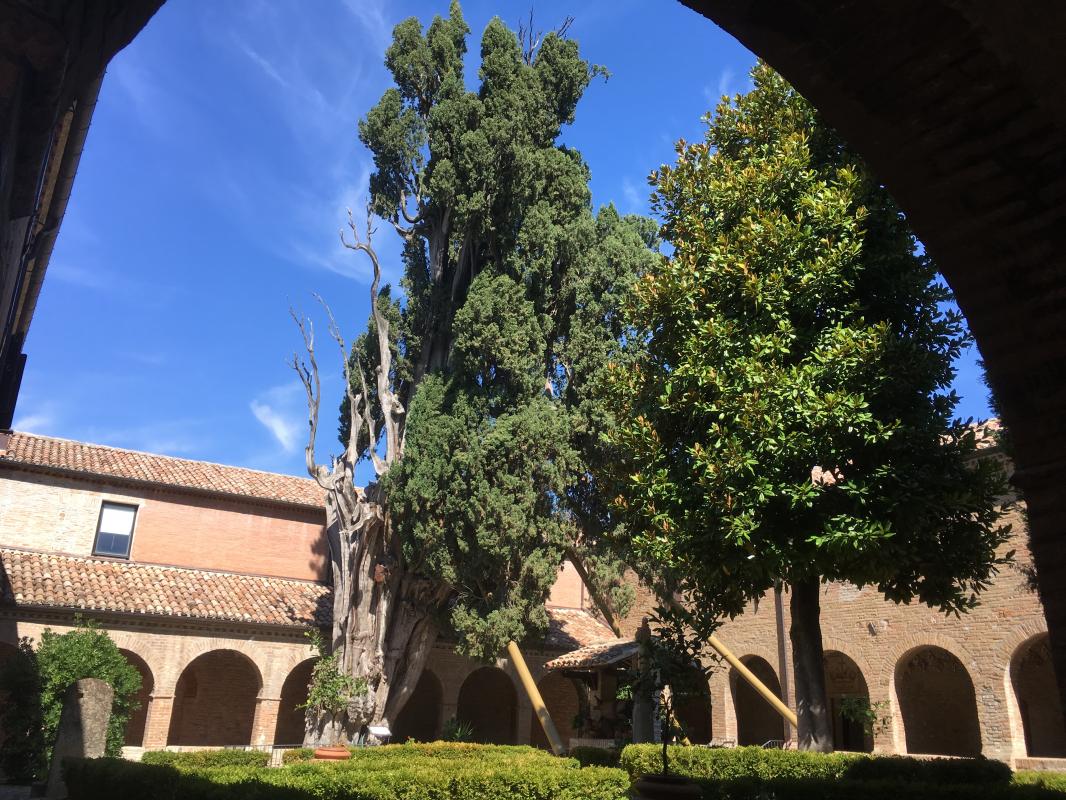
The Centenary Cypress of Saint Francis in Villa Verrucchio
The Centenary Cypress of Saint Francis in Villa Verrucchio
The Centenary Cypress of Saint Francis in Villa Verrucchio
Monasteries of Emilia-Romagna
According to tradition, during his journey to the Rimini area in the 13th century, Saint Francis planted in the ground the staff that had supported him along the way. Miraculously, the staff took root and grew into a cypress tree that would become part of history.
Over the centuries, the tree has withstood not only the forces of nature but also serious threats caused by human actions—especially during the Napoleonic era in the 19th century. When troops entered the convent, they were ordered to cut it down. They even attempted to burn it, but a messenger arrived just in time with a counter-order forbidding its destruction. During the Second World War, German soldiers burned part of the tree for warmth. Later, in 1980, its main top—rising 10 meters high—collapsed due to weather damage.
According to the Franciscan friars, this tree, which inspires awe with its beauty and majesty, symbolizes the idea that God is a strong support—just like what once supported Saint Francis.
Though weakened by age and past fires, the cypress is reinforced with slightly rusted metal supports. Even so, compared to many younger trees, it remains in good health. It has also been the subject of scientific studies seeking to uncover the secret of its remarkable longevity.
This monumental cypress, traditionally believed to have been planted in 1213 by Saint Francis, can still be admired today in the convent cloister. Standing 25 meters tall, it is a majestic living monument that has witnessed more than 800 years of history. One can only imagine the stories it could tell.
To see it is both fascinating and awe-inspiring. It stands as a living testimony to nature’s resilience—another wonder of Creation.
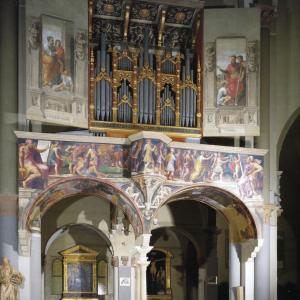
Una grande Abbazia urbana da riscoprire: San Pietro dei Padri Benedettini a Modena

A Parma: Il monastero di San Giovanni Evangelista fra Arte e Spiritualità
Monasteri Aperti 2024